 Anguilla
 Antigua and Barbuda
 Grenada
 Bahamas
 Barbados
 Belize
 Dominica
 Guyana
 Haiti
 Jamaica
 Montserrat
 St. Kitts and Nevis
 St. Lucia
 St. Vincent and the Grenadines
 Suriname
 Trinidad and Tobago
 Turks and Caicos
 Projects FAO Project CRFM Independent Review Displaying items by tag: regional cooperation
Stakeholders engage to translate Belize’s sustainable ocean priorities into coordinated action
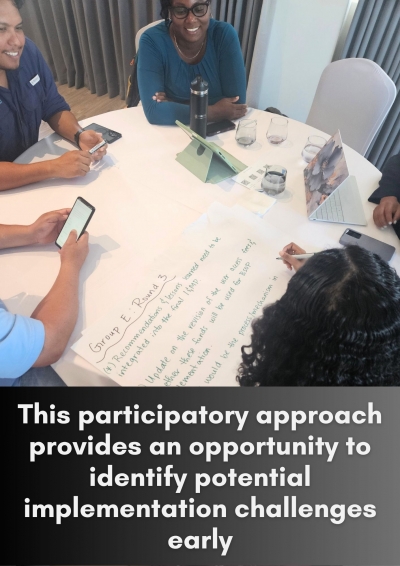
Belize City, Belize, Tuesday, 20 October 2026 (CRFM)—Stakeholders from across Belize’s governance, regulatory and ocean management landscape are meeting in Belize City for the Belize Sustainable Ocean Plan (BSOP) Implementation and Monitoring Plan Validation and Co-Design Workshop, an important step towards translating the country’s sustainable ocean priorities into practical, coordinated and implementable actions.

Representatives of key government ministries, departments, and regulatory agencies are among the stakeholders attending the two-day BSOP workshop.
Photo: BE-CLME+ Project
The workshop is being led by the Coastal Zone Management Authority and Institute (CZMAI) with support from the BE CLME+ Project and over the next 2 days, brings together representatives of key government ministries, departments, regulatory agencies and other stakeholders that have responsibilities for, or will be affected by, implementation of the BSOP.
The workshop moves beyond consultation to focus on validation, feasibility testing and co-design. Participants are critically reviewing the proposed implementation and monitoring arrangements to determine what will be required to translate the BSOP’s strategic priorities into coordinated action.
Through facilitated discussions and working sessions, stakeholders are examining the feasibility of proposed actions and generating clear recommendations and decisions on:
- priority actions for implementation;
- the roles and responsibilities of relevant government and regulatory agencies;
- institutional and inter-agency coordination arrangements;
- environmental, social and other relevant safeguards;
- human, technical and financial resource requirements;
- practical considerations that could enable or constrain implementation; and
- arrangements for monitoring progress and supporting accountability.

Attendees brainstorm to strengthen implementation and monitoring.
Photo: BE-CLME+ Project
A key focus of the workshop is ensuring that the proposed Implementation and Monitoring Plan reflects the realities of the agencies and stakeholders that will ultimately be responsible for delivering the BSOP. This participatory approach provides an opportunity to identify potential implementation challenges early, clarify institutional responsibilities and strengthen ownership of the actions proposed.
The BE CLME+ Project’s support for the initiative contributes to wider efforts to strengthen sustainable Blue Economy development and integrated ocean governance across participating Caribbean countries. In Belize, this support is helping to strengthen the enabling conditions needed to put national ocean priorities into practice.
World Oceans Day Remarks from CRFM Executive Director, Dr. Marc Williams
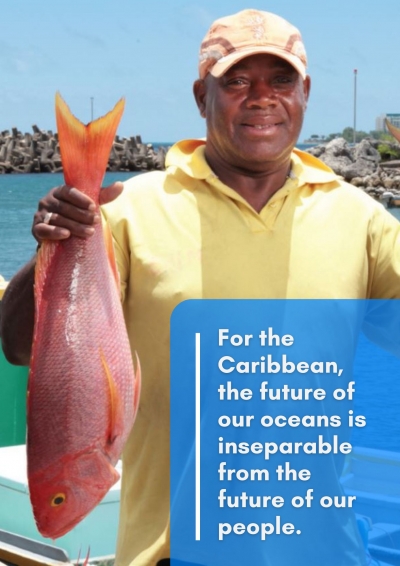

Today, as we observe World Oceans Day, we are reminded that the Caribbean Sea and our surrounding oceans are not only a source of natural beauty but also the foundation of livelihoods, culture, food security, and economic opportunity for millions of people across our region. The theme of ocean stewardship has never been more important. For the Caribbean, the future of our oceans is inseparable from the future of our people. Healthy marine ecosystems support fisheries, tourism, transportation, coastal protection, and countless other services that sustain our economies and communities. As we celebrate this day, we must reaffirm our collective commitment to safeguarding our marine resources for present and future generations.
Small-scale fisheries remain the backbone of the fisheries sector in most Caribbean countries. Thousands of fishers, fish vendors, processors, and their families depend directly on the sea for their livelihoods and well-being. These fisheries contribute significantly to local food supplies, employment, poverty reduction, and cultural heritage. As global food systems face mounting pressures from climate change, economic uncertainty, and supply chain disruptions, investing in sustainable small-scale fisheries is essential to strengthening regional food and nutrition security. We must continue to empower fishing communities through improved management, access to finance, modern technology, capacity building, and policies that recognize their invaluable contributions to national and regional development.
At the same time, the Caribbean has tremendous opportunities to expand sustainable mariculture and aquaculture as part of a diversified Blue Economy. Responsible mariculture can increase domestic seafood production, reduce reliance on imports, create jobs, attract investment, and build resilience to climate-related shocks. Through innovation, science-based planning, and effective marine spatial management, we can unlock new opportunities in marine fish farming, seaweed cultivation, shellfish production, and other ocean-based industries while safeguarding marine biodiversity. The CRFM remains committed to supporting Member States in advancing sustainable Blue Economy initiatives that balance economic growth, environmental stewardship, and social inclusion.
However, the promise of our oceans cannot be realized if marine pollution continues to endanger our ecosystems. Plastic waste, abandoned fishing gear, land-based runoff, wastewater discharge, and other pollutants are degrading coastal habitats, damaging coral reefs, threatening marine life, and undermining fisheries productivity. Addressing marine pollution requires action by governments, businesses, communities, and individuals alike. On this World Ocean Day 2026, let us renew our commitment to reducing pollution at its source, strengthening waste management systems, promoting sustainable consumption, and protecting the marine environment on which our prosperity depends. Together, we can build a cleaner, healthier, and more resilient Caribbean Sea that continues to nourish our people, support our economies, and inspire future generations.
Transforming Our Seas and Oceans Resources Collaboratively with Accredited Development Partners for the Benefit of all 13 years of progress: 2010 – 2023
Transforming Our Seas and Oceans Resources Collaboratively with Accredited Development Partners for the Benefit of all 13 years of progress: 2010 – 2023
Alwyn R. Ponteen, MSc;
Chief Fisheries and Ocean Governance Officer – Government of Montserrat
ABSTRACT
 The United Kingdom Overseas Territory (UKOT) Montserrat, a Small Island Development State (SIDS) within the global ocean space, recognises the significant role that the natural capital of the fisheries and ocean sector plays in its socio-economic growth and achievement of long-term sustainable development and well-being. Through extension from His Majesty’s Government (HMG) UK, the Government of Montserrat (GOM) is committed to its International Binding and Non-Binding Agreements.
For decades, the complexities of ineffective legal instruments, inadequate human capital, natural occurrences, human induced circumstances, coupled with climate change, alien invasive species and pollution continue to create adverse social and environmental issues. It was therefore critical to empower policy and decision makers to develop and implement an adaptive, holistic and harmonized natural capital framework for making effective use of the resources in a way that embeds sustainability and facilitates decision-making processes.
In 2010, the GOM took the bold step of embarking on an ambitious but realistic and adaptive programme aimed at transforming our seas and ocean resources collaboratively with accredited development partners with a shared vision. This was achieved by applying nature-based solutions, good governance, adaptive management, technological innovation, sound science and evidence-based information to strengthen the global effort in advancing environmental protection and sustainability for the nation’s socio-economic growth and well-being.
To achieve the United Nations’ 2030 Agenda, the GOM has imbedded SDG 17, Partnership for the goals and its associated targets, as the nucleus for strengthening the wealth economy framework of natural capital in the long term. As a small island developing state, sustainable financing, capacity building, technology just to name a few have been a real challenge over the years.

HOW TO CITE: Ponteen, A.R., 2026. Transforming Our Seas and Oceans Resources Collaboratively with Accredited Development Partners for the Benefit of all. Contribution 8.5, p563-575 IN CRFM, 2026. Volume I: Technical Papers. Presented at the CRFM 20th Anniversary Scientific Conference, 28-31 August 2023. CRFM Special Publication No. 37, CRFM Secretariat https://www.crfm.int/index.php?option=com_k2&view=item&id=949
POWERPOINT

VIDEO PRESENTATION

FULL SCIENTIFIC PUBLICATION


Download CRFM Special Publication No. 37:
Proceedings of the CRFM 20th Anniversary Scientific Conference
KEY LINKS
Scientific Conference Home Page
Scientific Conference Proceedings Page
Explore all 20th Anniversary Scientific Papers
NOTE
If you have challenges accessing or downloading documents in this series, please email us at This email address is being protected from spambots. You need JavaScript enabled to view it. , copied to This email address is being protected from spambots. You need JavaScript enabled to view it. , or call us at +501-223-4443. Some browsers do not properly load Google Drive documents, so if you have challenges accessing the PowerPoint slides or the full special publication, try switching to another browser such as Google Chrome or Microsoft Edge.