Anguilla
  Antigua and Barbuda
  Grenada
  Bahamas
  Barbados
  Belize
  Dominica
  Guyana
  Haiti
Haiti  Jamaica
  Montserrat
  St. Kitts and Nevis
  St. Lucia
  St. Vincent and the Grenadines
  Suriname
  Trinidad and Tobago
  Turks and Caicos

National Report on the Status of Fisheries and Aquaculture in ANGUILLA
Remone Johnson
Fisheries Manager Natural Resources Fisheries Unit
FISHERIES SUB-SECTORS AT A GLANCE
 Anguilla is the most northerly of the Leeward Islands, geographically positioned at 18.22° N, 63.07° W. The island land mass measures 35 square miles, 16 miles long and 3 miles wide and has a geological make up of predominantly coral and limestone. The highest elevation on the island rises to 213ft, while the rest of the island and its surrounding cays remain relatively flat. The main economic driver on the island is tourism, but fishing as a small industry also generates direct revenue for ~ 400 of the 14,000 residents of Anguilla and contributes roughly 1.2% towards the GDP. Anguilla’s exclusive fishing zone (EEZ) is 85,500km2, and 2,000km2 is submerged shelf. This submerged shelf supports the islands’ fishery and provides an abundance of shellfish products landed locally. The EEZ goes 200nm north into the Atlantic; with this abundance of fishing area, the local fishers only exploit up 35-40 miles.
The fishing industry of Anguilla is still very much un-developed, in the sense that there is no large-scale or commercial fishing industries and the technology, boats and equipment used are mundane. The 2022 record of licensed fishers shows that there are ~96 commercial vessels and ~240 fishers operating in Anguilla’s fishery. Besides one large trawler (16m), most of the fishers operate from locally constructed 5-15m, outboard-powered open hull vessels. The fishing methods employed include: purse seines, line fishing, Antillean or Z fish and lobster traps, speargun, longlines, trolling rods and FADs rods, to capture target species such as jacks, hinds, butter fish, doctor fish, parrot fish, shark etc. The latter methods are used to capture important commercial species such as snappers, tunas, wahoo, mahi mahi, lobster and crayfish. The Queen Conch (Strombus gigas) is also an important commercial species, which is harvested by skin diving or SCUBA.

HOW TO CITE: Johnson, R., 2026. National Report on the Status of Fisheries and Aquaculture in Anguilla. Contribution 10.1, p1-10 IN CRFM, 2026. Volume II: National Reports on the Status of Fisheries and Aquaculture. Papers presented at the CRFM 20th Anniversary Scientific Conference, 28-31 August 2023. CRFM Special Publication No. 37, CRFM Secretariat https://www.crfm.int/index.php?option=com_k2&view=item&id=955
POWERPOINT
VIDEO PRESENTATION
FULL SCIENTIFIC PUBLICATION
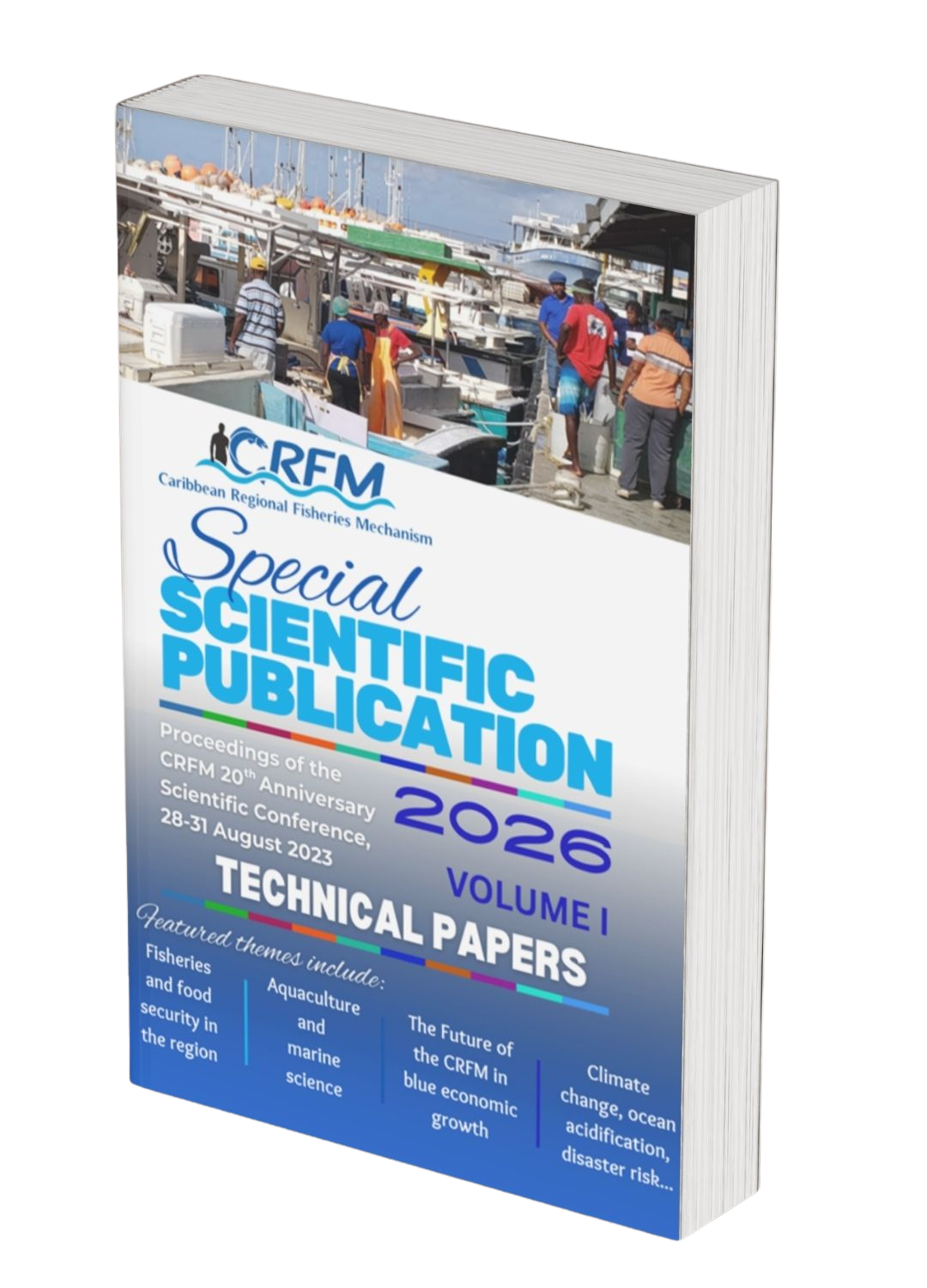
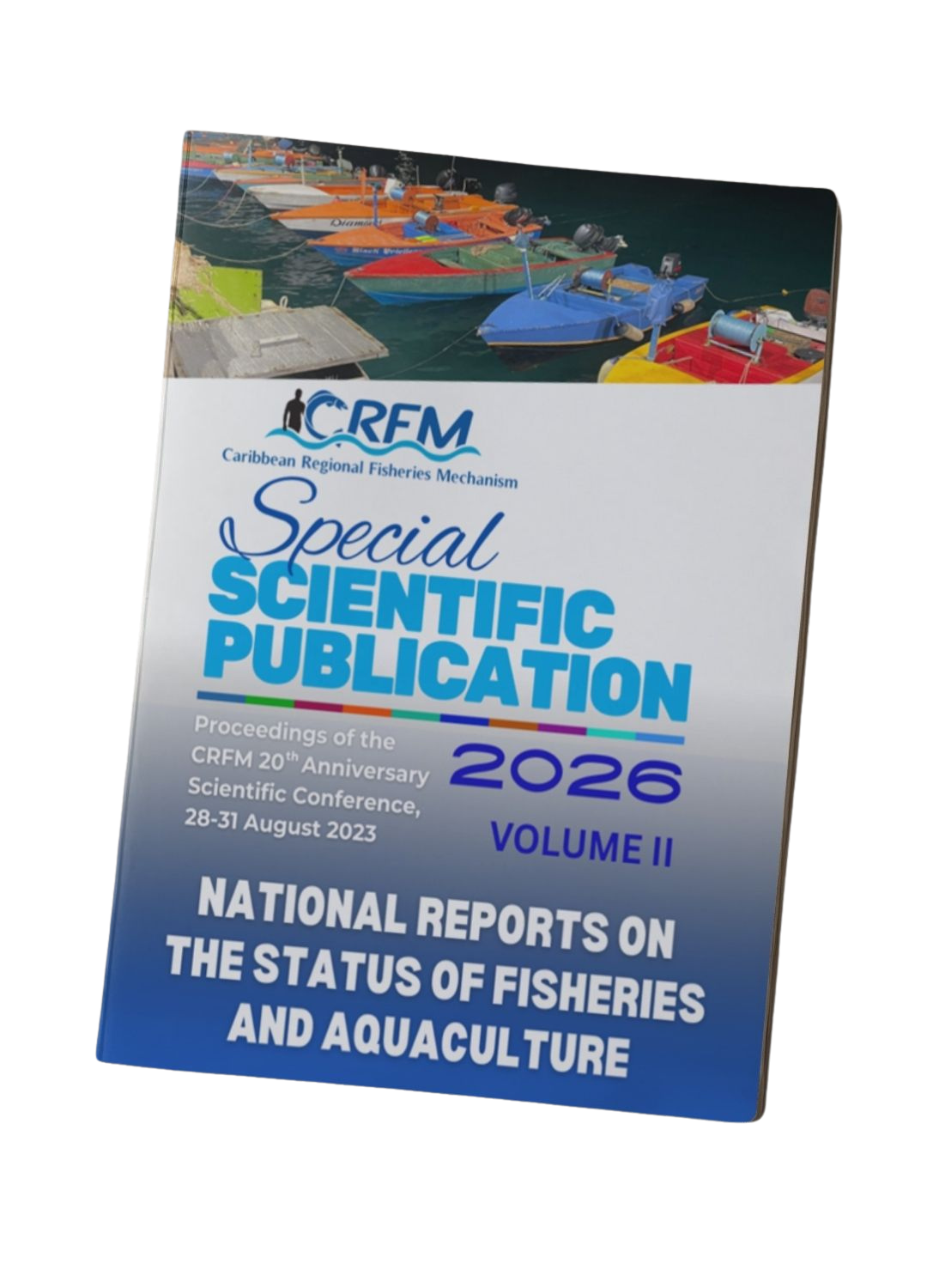
Download CRFM Special Publication No. 37:
Proceedings of the CRFM 20th Anniversary Scientific Conference
KEY LINKS
Scientific Conference Home Page
Scientific Conference Proceedings Page
Explore all 20th Anniversary Scientific Papers
NOTE
If you have challenges accessing or downloading documents in this series, please email us at This email address is being protected from spambots. You need JavaScript enabled to view it. , copied to This email address is being protected from spambots. You need JavaScript enabled to view it. , or call us at +501-223-4443. Some browsers do not properly load Google Drive documents, so if you have challenges accessing the PowerPoint slides or the full special publication, try switching to another browser such as Google Chrome or Microsoft Edge.