 Anguilla
 Antigua and Barbuda
 Grenada
 Bahamas
 Barbados
 Belize
 Dominica
 Guyana
 Haiti
 Jamaica
 Montserrat
 St. Kitts and Nevis
 St. Lucia
 St. Vincent and the Grenadines
 Suriname
 Trinidad and Tobago
 Turks and Caicos

From Sea to Market: Eastern Caribbean Fishers Explore Belize’s Lobster Industry and Regional Trade Opportunities
By Dr. Marc Williams, CRFM Executive Director
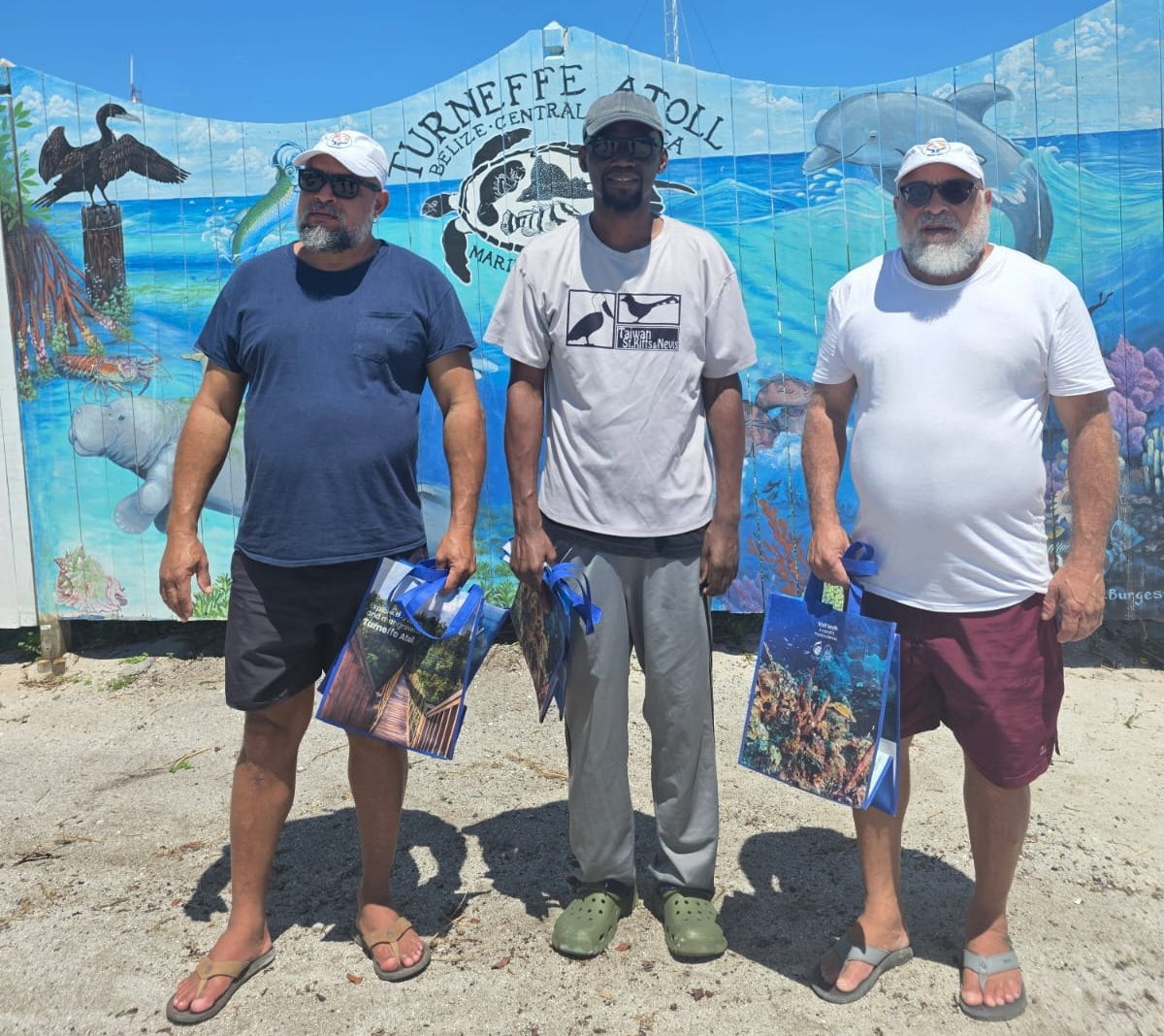
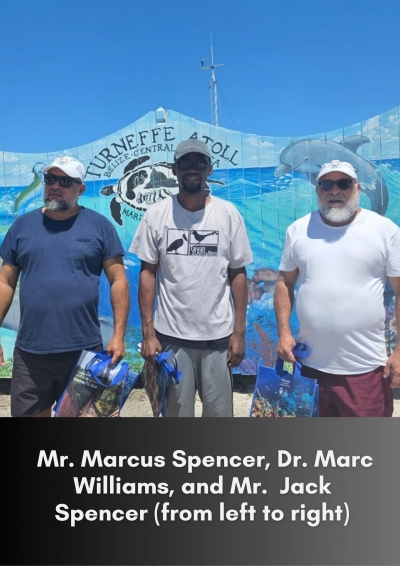
Mr. Marcus Spencer, Dr. Marc Williams, and Mr. Jack Spencer (from left to right)
A fisheries exchange in Belize has brought fishers and seafood businesspeople from the Eastern Caribbean face-to-face with Belizean fishers, cooperatives, fisheries managers, and conservation partners, sparking new conversations about how the Caribbean can strengthen trade in lobster and other seafood products while learning from successful fisheries management practices across the region.
From September 15–19, 2026, Mr. Jack Spencer and Mr. Marcus Spencer of St. Kitts and Nevis, along with Mr. Calvin Josiah of St. Martin, visited Belize to examine the country's lobster industry and explore opportunities to increase trade in fish and fish products between Belize and the Eastern Caribbean.
The Caribbean Regional Fisheries Mechanism (CRFM) and the Caribbean Network of Fisherfolk Organisations (CNFO) coordinated the week's program, with support from government agencies, fisher cooperatives, conservation partners, and local fishers in Belize.
The exchange took participants from cooperative processing facilities and government offices to fishing camps and co-management sites on Turneffe Atoll, offering a rare opportunity to follow Belize's lobster industry from sea to market.
Seeing the lobster value chain first-hand
The program began on September 15 with a meeting with the Belize Fishermen Cooperative Association (BFCA) Ltd., during which participants exchanged experiences and discussed the operations of Belize's fishing cooperative sector.
The delegation subsequently toured the facilities of the National Fishermen Producers Cooperative Society Ltd. (NFPCSL) and the Northern Fishermen Cooperative Society Ltd. (NFCSL).
The visits provided firsthand exposure to lobster receiving, handling, processing, and market preparation. Participants observed how value is added after lobster arrives at the cooperative and how the product moves through the supply chain to consumers.
The discussions also examined the role of cooperatives in organizing fishers, maintaining product quality, facilitating market access, and generating greater economic value from fisheries resources.
For the visiting fish businesspeople, the experience provided an opportunity to explore potential commercial relationships with Belizean suppliers and to understand better what would be required to increase the movement of lobster and other seafood products between Belize and Eastern Caribbean markets.
Understanding how Belize manages its fisheries
On September 16, the delegation met with representatives of Belize's Ministry of the Blue Economy. Participants received an overview of the history and development of the country's lobster fishery, its operations, and the legal and institutional mechanisms governing the industry.
Later that day, the group met with the CRFM for a broader regional discussion on lobster fisheries, seafood markets, and the opportunities and challenges of expanding intra-Caribbean trade in fish and fish products.
The program continued September 17 with detailed discussions hosted by the Belize Fisheries Department. Participants examined lobster and other fisheries operations, management arrangements, trade requirements, legislation, and compliance and enforcement.
These discussions underscored a central message of the exchange: building a profitable fisheries sector must go hand in hand with the responsible management of the resources that fishers, businesses and coastal communities depend on.
The Belize Fisheries Department, the Turneffe Atoll Sustainability Association (TASA), and CRFM also finalized arrangements for the delegation to observe fisheries management and lobster operations at Turneffe Atoll directly.
Taking the exchange to the fishing grounds
On September 19, the program moved from meeting rooms to the sea as TASA led the delegation on a field visit to Turneffe Atoll, supported by the Belize Fisheries Department, CRFM, and Belizean fisher Jason Young.
At Mr. Young's lobster fishing camp, participants saw how lobster traps are constructed and learned about the preparations Belizean fishers make for the lobster season. The encounter provided an opportunity for direct fisher-to-fisher exchange on fishing methods, practical experience, and the realities of operating a lobster fishing business.
The delegation then visited the Caye Bokel co-management site, which supports fisheries management in the southern portion of the Turneffe Atoll Marine Reserve, followed by Calabash Caye, a co-management site serving the reserve's middle portion.
The field experience underscored the importance of partnerships among fishers, government, and conservation organizations for sustainably managing valuable fisheries resources.
Participants see potential for wider Caribbean exchanges
The visiting delegation praised the hospitality and openness of the organizations and individuals who supported the program.
Jack Spencer expressed appreciation for the willingness of Belizean fisherfolk, the Government of Belize, TASA and CRFM to accommodate the delegation and openly share their experiences.
Marcus Spencer said he was impressed by the fisheries management practices he observed and would like other Caribbean fishers to benefit from similar opportunities.
“The fisheries in Belize are well managed, and I would love for other fishers in the Caribbean to have similar experiences,” Spencer said.
Calvin Josiah highlighted the potential for greater fisheries trade between Belize and the Eastern Caribbean, while noting that transportation and logistics will be critical to transforming commercial interest into sustainable trade.
The observation points to a wider challenge facing intra-regional seafood commerce: ensuring that transportation, cold-chain systems, distribution arrangements and other logistics can efficiently connect producers with Caribbean markets.
Connecting Caribbean fishers, businesses, and markets
The Belize exchange demonstrated the value of practical fisher-to-fisher, cooperative-to-cooperative, and business-to-business exchanges to strengthen Caribbean fisheries. Such initiatives can enable fishers to learn techniques directly from their counterparts, expose fisheries entrepreneurs to processing and value-addition opportunities, strengthen relationships among cooperatives, and connect seafood producers with prospective buyers.
The visiting fishers and businesspeople thanked the BFCA, NFPCSL, NFCSL, the Ministry of the Blue Economy, the Belize Fisheries Department, TASA, CNFO, and CRFM, as well as the local fishers and other partners who contributed to the program. The delegation expressed hope that the visit will mark the start of longer-term cooperation between Belize and fisheries stakeholders in St. Kitts and Nevis, St. Martin, and the wider Caribbean.
The opportunity extends beyond lobster. Stronger regional connections could support increased trade in Caribbean seafood, greater value addition, stronger fisheries enterprises, improved food and nutrition security, and more resilient livelihoods for fishing communities. For fishers and fisheries entrepreneurs elsewhere in the region, the Belize experience also invites them to imagine what similar exchanges could achieve.
The Caribbean Sea does not have to separate the region's fishing communities and markets. Through greater cooperation, knowledge exchange, and trade, it can increasingly become the link that connects them.
Promoting Fisher-led Implementation of the SSF Guidelines in Saint Vincent and Grenadines

Saint Vincent and Grenadines, 12 May 2025 (CNFO)—The National Fisherfolk Organisation in Saint Vincent and the Grenadines (SVG), with the Caribbean Network of Fisherfolk Organisations (CNFO), is implementing a workshop: “Promoting fisher-led implementation of SSF Guidelines in the Caribbean Region." Partners are Sandals Resorts International (SVG) and CSFUND. The workshop is being held from May 12-13, 2025 at the Sandals Resort's conference room in Saint Vincent and the Grenadines.
The CNFO has participated in the development of both the Caribbean Community Common Fisheries Policy (CCCFP) and the global policy, the Voluntary Guidelines on Securing Sustainable Small-Scale Fisheries in the context of food security and poverty eradication (or the SSF Guidelines).

The network was instrumental in having the SSF Guidelines enshrined into the first protocol of the Caribbean Community Common Fisheries Policy. Although the SSF guidelines is imbedded within the fisheries policy of the Caribbean Community, there is limited focus on active implementation while SSF fishers are increasingly being challenged by NGO agendas, climate change, ecosystem degradation, marine protected areas (MPAs) and marine spatial planning (MSP), and so called “Blue Economy” initiatives.

The objectives of this meeting are:
- Build awareness and understanding of regional and global fisheries policy, namely the Caribbean Community Common Fisheries Policy, and the Voluntary Guidelines on Securing Sustainable Small-Scale Fisheries in the context of food security and poverty eradication;
- Develop draft advocacy plans for fishers to address major concerns;
- Develop draft plans for fisher-led implementation of the SSF Guidelines;
- Build awareness of the CNFO’s Regional Code of Conduct;
- Fisheries value chain discussions; and
- Marketing of fish in Saint Vincent and the Grenadines.
The National Fisherfolk Organisation in Saint Vincent and the Grenadines joins the regional network in spearheading the active implementation of these policy documents, as one of the means to improve fishers’ lives in the region. The SSF Guidelines place the people (small-scale fishers) at the centre of development in a clearly synergistic manner with the Sustainable Development Goals.
- End -
PRESS CONTACT:
NAME: Winsbert Harry
PHONE: +1 (784) 495-2008
E-mail: This email address is being protected from spambots. You need JavaScript enabled to view it.
About CNFO: The Caribbean Network of Fisherfolk Organisations (CNFO) is a regional network of small-scale fisherfolk and their organisations operating across the Caribbean Community (CARICOM). The network is committed to the realization of profitable and sustainable fisheries that support fisherfolk's livelihoods, promote effective ecosystem-based management of fisheries resources, contribute to food security for Caribbean communities, and increase resilience to risks, including climate change. For more information on CNFO, see: https://cnfo.fish/.
Disclaimer: This press release was shared by the Caribbean Network of Fisherfolk Organisations, and the views expressed herein are those of the CNFO and not necessarily those of the Caribbean Regional Fisheries Mechanism.
CRFM advises fishers to be prepared and stay vigilant amid forecast for active 2022 Atlantic Hurricane Season

Belize City, Friday, 22 July 2022 (CRFM)—The Caribbean Regional Fisheries Mechanism (CRFM) is advising fishers and fishing communities across its seventeen (17) Member States to PREPARE and GET READY as we approach the peak of the 2022 Atlantic Hurricane Season. Early preparation and understanding risks are key to reducing loss, damage and injury to fishers and their families.
Fishers and fishing communities should take steps to prepare for any disaster. One of the available tools is the Fisher Early Warning and Emergency Response (FEWER) mobile app. Fisherfolk should also stay informed and carefully follow official information from the government about severe weather systems and hurricanes (shared via our live map). Fishers should be aware of their risks and safeguard themselves from hazards such as high winds and turbulent seas, storm surge and storm tide, rip currents, heavy rainfall and flooding, and tornadoes.


Fishers are also encouraged to make a family emergency plan and have an emergency kit with supplies, enough food, water, medicine and other essentials that will last them for at least two weeks.
The CRFM cautions fishers against operating vessels under these conditions and urges them to act early to secure their boats and store their fishing gear and basic supplies like ropes, lines, hooks, coolers, crimps and crimpers in the event of an approaching storm. This will help to ensure that fishers can protect their livelihoods and return to fishing more quickly after the storm passes and minimize lost and abandoned fishing gear that will continue to ghost fish.

A few weeks ago, the Colorado State University (CSU) updated its April 2022 prediction—from 19 named storms and 4 major hurricanes to 20 named storms and 5 major hurricanes—noting that this hurricane season will be “well above-average.” An average season has about 14 named storms and 3 major hurricanes. According to the National Oceanic and Atmospheric Administration (NOAA), 2022 will mark the 7th straight year having busier-than-normal tropical cyclone activity for the Atlantic Basin and the Caribbean region.
Fisherfolk are encouraged to stay vigilant by following the forecasts during this hurricane season and to contact their disaster management office or their national Fisheries Department or Division if they sustain damages to their vessels or equipment due to a storm or hurricane event. Fishers are urged to continue to work together to support and help each other to prepare during the hurricane season and to assist in the event they are impacted by severe weather systems in 2022.
--------- End of Release---------
Minister Green launches insurance coverage for fishing vessels

Thursday, 24 June 2021 (Jamaica Ministry of Agriculture and Fisheries) For the first time, Jamaica’s 26,000 registered fishers will have access to insurance coverage for their vessels, engines and other equipment with the launch of the Safety Net insurance policy provided by Advantage General Insurance Company.
“This Advantage Safety Net policy is the first of its kind. It is the first [time] that artisanal fishers will be able to go into an insurance company to take out an insurance policy to protect their fishing vessels,” said Green.

Minister Green (left) at the unveiling of the Safety Net policy for fishers
Speaking at the virtual launch held at the Ministry's Hope Gardens offices in St. Andrew on June 22, Green said the policy will protect fishers against a wide array of perils both at sea and on land and even when their vessels are being repaired.
“It not only gives them greater security; it also gives them greater accessibility to the things they need to enhance their businesses,” Green stated.
In addition, Advantage General has also provided for fishers and farmers special access to discounted rates for insuring their cars and homes, the agriculture and fisheries minister stated.
Noting the need to provide protection for farmers in relation to all the investments that they have placed in the ground and in their greenhouses that are subject to so many vagaries, especially in relation to weather, Green said the next step is the provision of crop insurance.
For her part, Vice-President of Underwriting and Channel Management at Advantage General, Ruth Cummings, in outlining the benefits under the package, said the protection provided by the Safety Net policy includes accidental loss or damage to fishing vessels and accessories by fire, explosion, malicious acts, flood, hurricanes and other such perils as well as theft of vessel or outboard.
“We believe it is important that fisherfolk are protected and have peace of mind as they go about their business,” said Cummings.

ABOUT SAFETY NET POLICY
The Safety Net policy provides coverage for accidental physical loss or damage to the fishing vessel and its accessories including theft. For the first time, vulnerable fishing communities will have access to insurance coverage developed specifically for them.
We recognize our fishers and farmers as the backbone of our economy and the primary providers of the food we eat. We want to protect their livelihood by providing affordable and accessible insurance coverage.